Someone awake at three in the morning.
The hours that worry families most are the ones nobody sees. Overnight care means a caregiver who is genuinely awake — not asleep down the hall hoping to be woken.
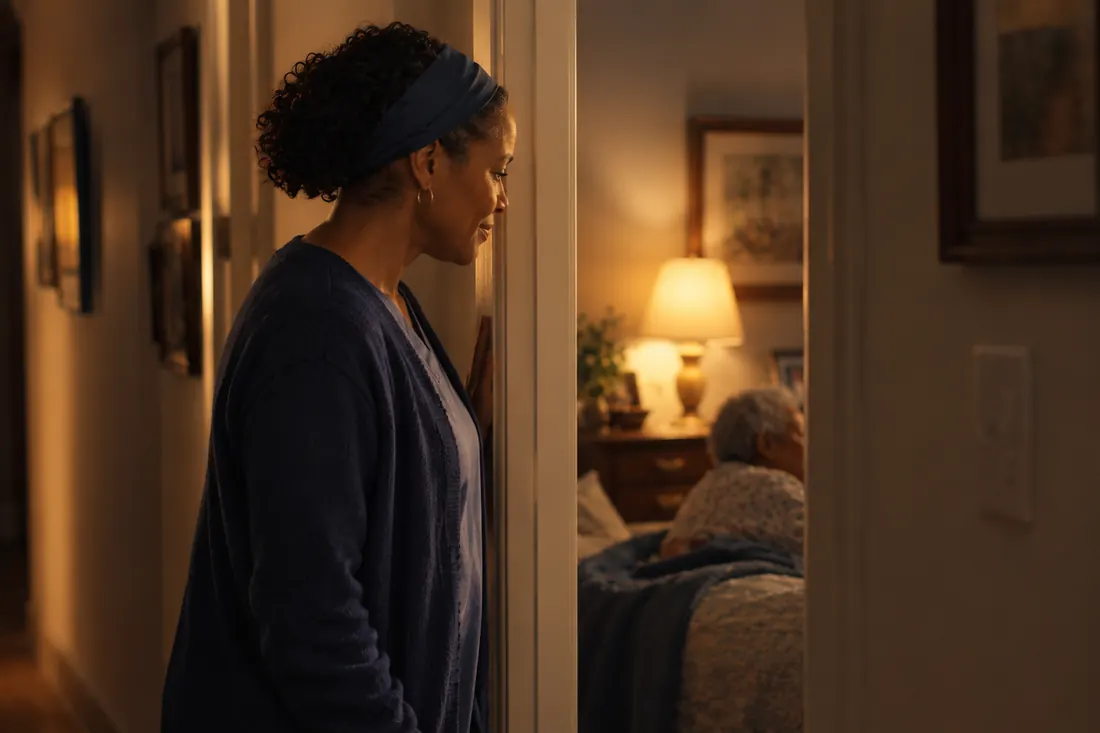
Awake care, not live-in
These are two different products and the difference matters enormously. We lead with awake care because it's what most families actually need.
- A caregiver alert the entire shift, in 12-hour rotations
- Help to the bathroom at any hour, which is when most falls happen
- Repositioning through the night for anyone at risk of pressure sores
- Someone present for night-time confusion and wandering
- Breakfast, medication reminders and a handover in the morning
- A written note every night about how it went
About live-in care
We do offer it, but we quote it after an assessment rather than publishing a rate — and we'll often steer you away from it.
Live-in means one caregiver sleeping in the home. It sounds like more coverage for less money, and on paper it is. In practice, if your family member is up three or four times a night, a sleeping caregiver is neither rested nor genuinely available, and the arrangement falls apart within weeks.
Live-in works well when nights are mostly quiet and the need is companionship and daytime help. It works badly for advanced dementia, frequent toileting, or fall risk. We'll tell you honestly which situation you're in.
- One 12-hour night$516
- Full 24-hour awake day$1,032
- Seven nights a weekAbout $15,600/mo
- Live-inQuoted after assessment
24-hour awake coverage takes a team of four to five caregivers. We only accept these cases when we can genuinely staff them.
Before you commit to this
Round-the-clock care is the most expensive thing we offer, and it isn't always the right answer. At this level, nursing homes and memory care facilities in Massachusetts become cost-competitive.
What home still buys you is familiarity, one-to-one attention, and staying in a place someone recognises. That's often worth it — but it should be a decision you make with the real numbers in front of you, and we'll put them there.
Let's talk about the nights
Tell us what's actually happening after dark and we'll tell you which kind of care fits — including if it isn't us.